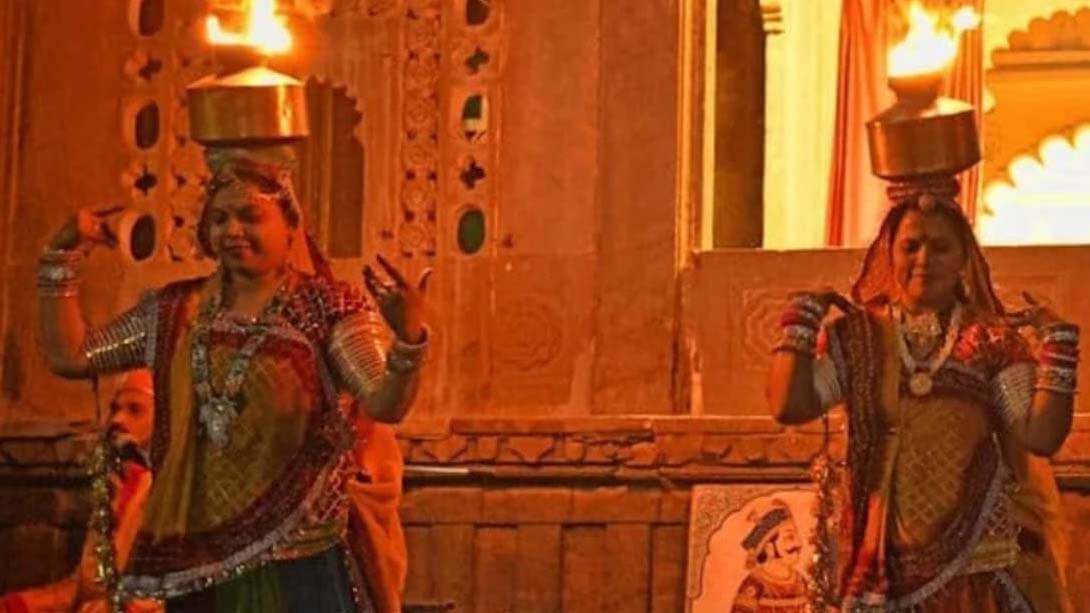
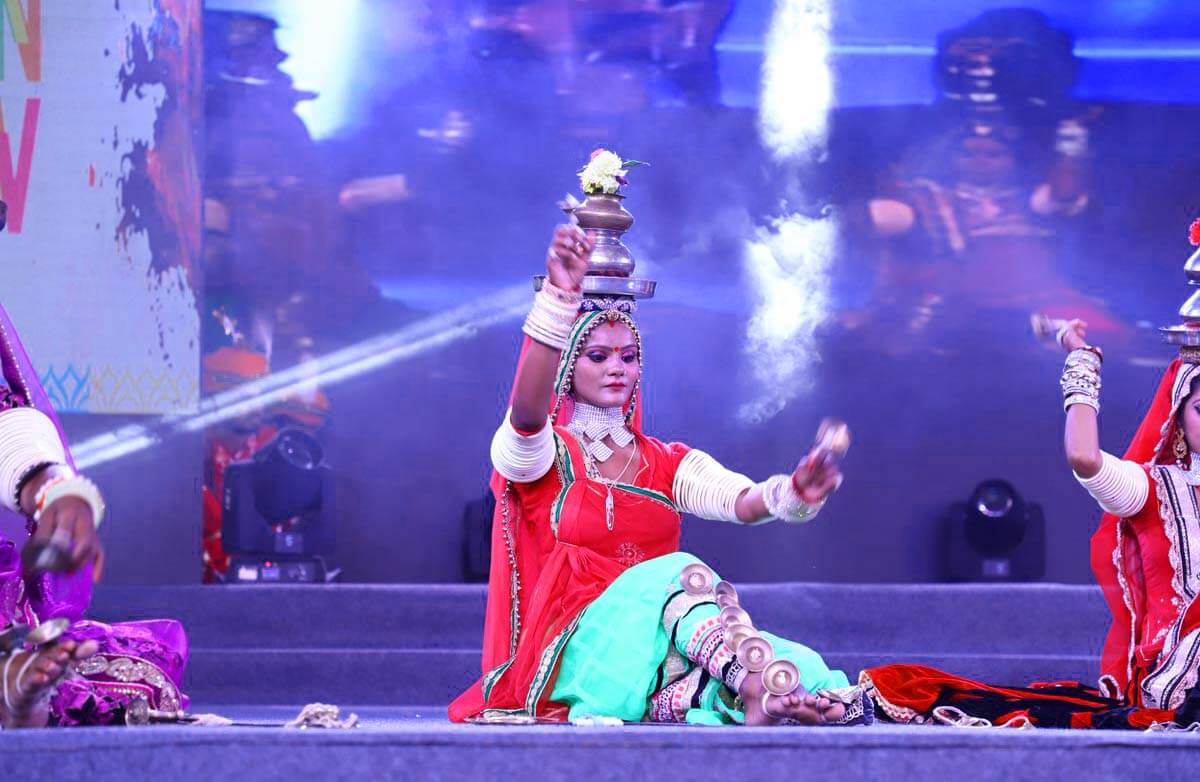
The Bhavai Dance of Rajasthan stands as one of the most extraordinary and death-defying folk dance performances in Indian cultural history. This breathtaking acrobatic folk dance showcases performers balancing multiple earthen or brass pots—sometimes up to seven to nine pots—on their heads while executing complex dance movements, often while standing on the edge of a glass, a sword, or even on a bed of nails. Originating from the Bhavai community of snake charmers and acrobats in Rajasthan, this Rajasthani Bhavai dance represents the perfect fusion of artistry, courage, and decades of dedicated training. The dance is traditionally performed by women who demonstrate extraordinary balance, strength, and grace while performing seemingly impossible feats that leave audiences spellbound. Explore more traditional folk dances of Rajasthan that showcase the state's incredible artistic heritage. Today, professional Bhavai dance artists continue to preserve this ancient tradition, performing at royal weddings, cultural festivals, heritage hotels, and international platforms, earning worldwide recognition for this unique pot balancing dance Rajasthan art form.
History & Origins of the Bhavai Folk Dance of Rajasthan
The Bhavai Dance traces its origins to the nomadic Bhavai community of Rajasthan, traditionally known for their snake-charming and acrobatic skills. The word "Bhavai" itself refers to both the community and their theatrical folk performances. Historical records suggest that this dance form has existed for several centuries, with its roots in the traditional entertainment provided by traveling performers who would showcase their extraordinary skills at village fairs, royal courts, and festive celebrations across Rajasthan and Gujarat.
The art form was developed as a means of livelihood for the Bhavai community, who perfected the technique of pot balancing through generations of practice and training. Young girls would begin their training as early as five or six years old, gradually developing the neck strength, core stability, and balance required to perform this demanding dance. The traditional Bhavai dance was not merely entertainment but a demonstration of human capability, discipline, and the triumph of skill over seemingly impossible challenges.
During the royal era of Rajasthan, Maharajas and Maharanis were patrons of Bhavai performers, inviting them to perform at palace celebrations and important occasions. The dance gained particular popularity in the courts of Udaipur, Jaipur, and Jodhpur, where rulers appreciated the extraordinary skill and bravery displayed by the performers. The acrobatic elements of the dance were continually refined and made more challenging, with performers competing to balance more pots or perform on increasingly difficult surfaces.
In the 20th century, the Bhavai dance Rajasthan faced challenges as modernization reduced opportunities for traditional performers. However, cultural preservation efforts and the tourism industry's growth helped revive interest in this unique art form. Today, government organizations, cultural institutions, and heritage hotels actively support Bhavai artists, ensuring the continuation of this centuries-old tradition. The dance has been featured in numerous documentaries, cultural programs, and international folk festivals, introducing global audiences to this remarkable example of Rajasthani folk artistry. Modern performers continue to train in the traditional methods while adapting the dance for contemporary stage performances, maintaining the core techniques that make Bhavai one of the world's most impressive folk dance forms.
Bhavai Dance Performance & Technique - How the Balancing Act Works
The performance of Bhavai Dance is a masterclass in balance, strength, and showmanship. What appears effortless to audiences requires years of rigorous training and exceptional physical conditioning. The dance combines multiple challenging elements that distinguish it from other folk dances.
Bhavai Dance by the Numbers
Pot Balancing Mastery
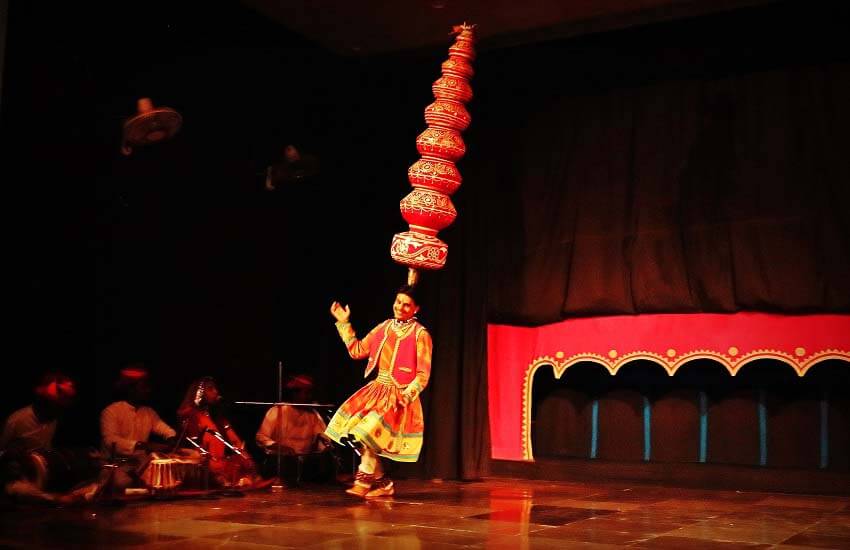
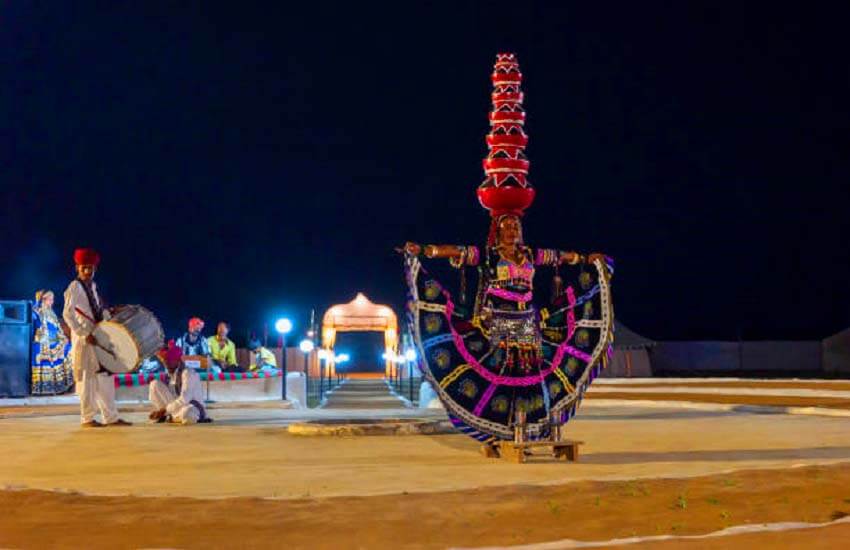
The signature element involves balancing multiple pots (typically 7-9) stacked on the head without using hands. Performers start with a circular base pot wrapped with cloth to provide stability, then stack additional pots on top. The neck muscles and spine alignment are crucial for maintaining balance during movement.
Intricate Footwork
Despite the extreme challenge of balancing pots, dancers perform complex footwork patterns including rhythmic steps, turns, and circular movements. The feet execute traditional Rajasthani folk dance steps while the upper body remains perfectly still and aligned to maintain pot stability.
Glass Walking Performance
The most spectacular element involves dancers performing while standing on the sharp edge of a glass tumbler or on broken glass pieces. This requires extraordinary balance and fearlessness, with performers distributing their weight precisely to avoid injury while continuing to dance with pots on their head.
Sword & Nail Platforms
Advanced performers demonstrate their skills by dancing on swords laid on the ground or even on platforms studded with nails. These death-defying acts showcase the ultimate level of body control, mental focus, and years of conditioning that allows performers to execute these seemingly impossible feats.
Performance Structure
A typical Bhavai Dance performance begins with the dancer entering while gracefully balancing a single pot, gradually building audience anticipation. Additional pots are carefully added one by one, each addition met with applause. The dancer then performs increasingly complex movements—spinning, bending, and executing traditional folk dance steps. The climax involves the most challenging element: dancing on glass, swords, or nails while maintaining perfect balance with all pots intact. Professional Bhavai dance artists India coordinate with traditional musicians playing dholak, harmonium, and nagara, creating a complete cultural experience. The performance concludes with the dancer carefully removing pots one by one, often to thunderous applause for the extraordinary feat they've just witnessed.
Training, Skills & Physical Conditioning
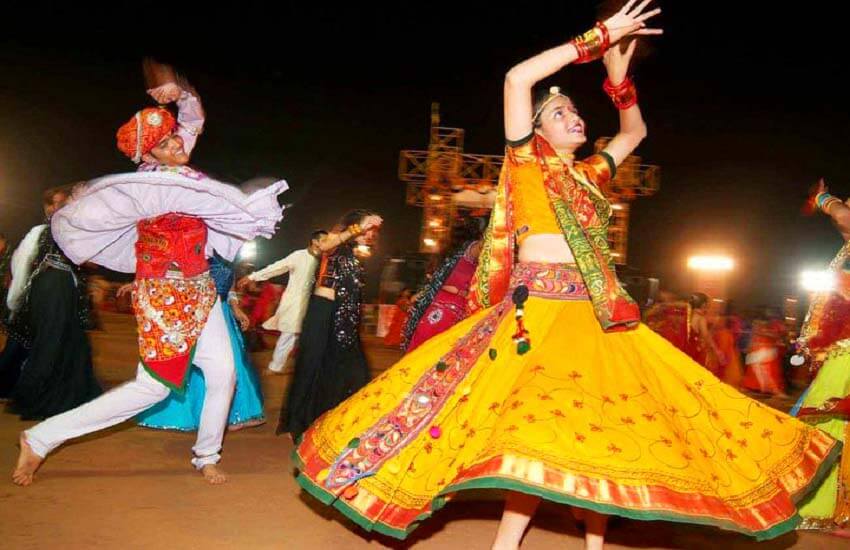
The Bhavai Training Process - Beginning at Age 5
Becoming a Bhavai Dance performer requires an extraordinary commitment that typically begins in childhood. Young learners start training between ages 5-8, when their bodies are most adaptable. The training process is gradual and methodical, beginning with basic balance exercises using lightweight containers and progressively advancing to heavier brass or earthen pots.
Initial training focuses on developing neck strength through specific exercises and gradually increasing the weight balanced on the head. Students practice maintaining perfect posture while balancing objects for extended periods, first while standing still, then while walking, and eventually while performing dance movements. The training also includes traditional Rajasthani folk dance steps, ensuring performers can execute graceful choreography while managing the extreme balance challenge.
Essential Physical Skills for Bhavai Dancers
- Neck and Core Strength: Exceptional muscle development in the neck, shoulders, and core is essential for supporting the weight of multiple pots and maintaining stability during movement
- Balance and Proprioception: Performers develop an extraordinary sense of body position and spatial awareness, allowing them to maintain equilibrium even on unstable surfaces
- Mental Focus: Absolute concentration is required throughout the performance, as any lapse in attention could result in pots falling or injury when performing on dangerous surfaces
- Flexibility: While maintaining rigid upper body alignment, performers need flexible lower bodies to execute complex footwork patterns
- Pain Tolerance: Especially for glass and nail walking, performers develop conditioned feet and mental resilience to perform seemingly painful acts safely
Safety Measures & Modern Adaptations in Bhavai Dance
Professional Bhavai dance artists today incorporate modern safety protocols while preserving traditional techniques. Performers undergo medical check-ups to ensure physical fitness, particularly spinal health. When performing on glass, special techniques are employed to distribute weight safely. Modern performances may use specially prepared glass or controlled conditions to reduce risk while maintaining visual impact. Training now often includes physiotherapy and proper warm-up routines to prevent injuries. Despite these adaptations, the core skills—the ability to balance multiple pots and perform on challenging surfaces—remain as demanding as ever, requiring the same dedication and years of practice that have defined this art form for generations.
Traditional Costumes & Music of the Bhavai Dance
Bhavai Dance Costume & Attire
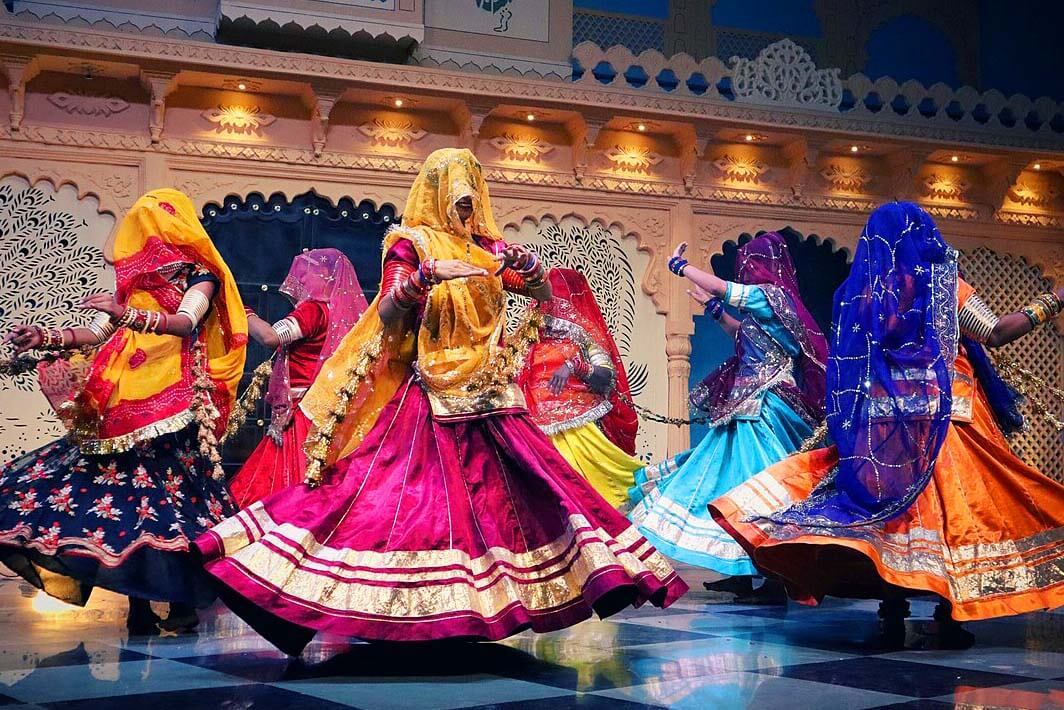
The costume for Rajasthani Bhavai dance is designed for both visual appeal and practical functionality. Female performers wear traditional Rajasthani ghagras (long, flowing skirts) in vibrant colors such as red, green, yellow, and orange, often featuring mirror work, embroidery, and traditional bandhani (tie-dye) patterns. The full-length skirts create beautiful visual effects during spins and movements.
A fitted choli (blouse) and odhni (veil) complete the ensemble, though the odhni is typically draped to avoid interfering with the pots balanced on the head. Traditional Rajasthani jewelry includes silver bangles, anklets with bells that create rhythmic sounds, elaborate necklaces, and earrings. However, heavy head ornaments are avoided as they could affect balance. The base cloth wrapped around the head to support the pots becomes an integral part of the costume, often matching the outfit's colors.
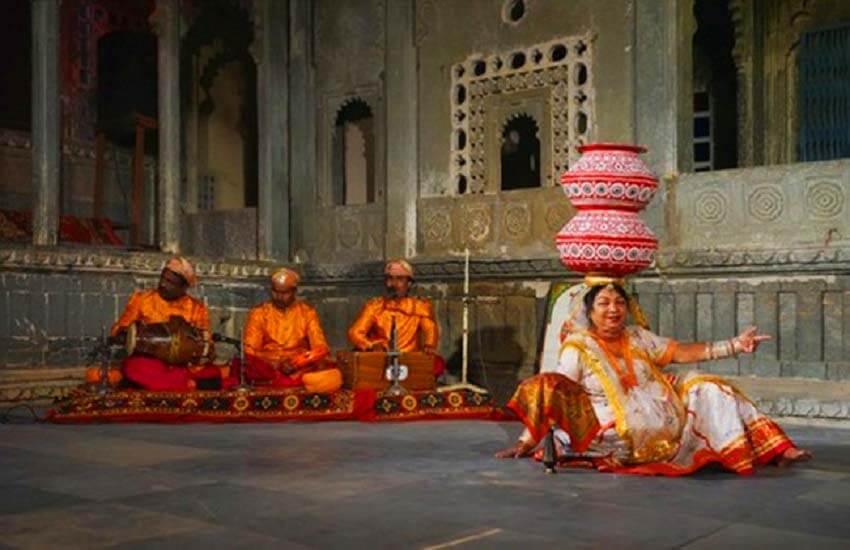
Musical Accompaniment - Dholak, Harmonium & Nagara
The Bhavai Dance is performed to traditional Rajasthani folk music that provides rhythmic support for the dancer's movements. The primary instruments include:
- Dholak: The main percussion instrument providing the rhythmic foundation, with beats matching the dancer's footwork
- Harmonium: Provides melodic accompaniment with traditional Rajasthani folk tunes
- Nagara: Large drums used during dramatic moments, especially when the dancer performs on glass or swords
- Manjira (Cymbals): Add bright, accentuating sounds to highlight specific movements
- Vocals: Folk singers perform traditional songs praising Rajasthani culture, adding narrative to the performance
The music begins with a moderate tempo as the performer enters and starts balancing pots, gradually building intensity as more pots are added and movements become more complex. During the most challenging moments—such as dancing on glass—the music reaches a crescendo, creating dramatic tension. The coordination between musicians and dancer is crucial, with experienced performers and musicians developing an intuitive understanding that enhances the overall performance impact.
Cultural Significance of the Bhavai Folk Dance of Rajasthan
The Bhavai Dance holds profound cultural significance beyond its spectacular visual appeal. It represents the triumph of human determination, skill, and discipline over seemingly impossible challenges. For the Bhavai community, this dance has been not just an art form but a means of livelihood and cultural identity for generations, representing their unique contribution to Rajasthan's rich folk traditions.
A Symbol of Women’s Strength in Rural Rajasthan
Traditionally performed primarily by women, Bhavai Dance serves as a powerful symbol of feminine strength, courage, and capability. The dance challenges conventional gender stereotypes by showcasing women performing death-defying acts that require extraordinary physical and mental strength. In rural Rajasthan, successful Bhavai performers gain significant respect and social status, demonstrating how artistic excellence can provide women with recognition and economic independence.
Where the Bhavai Dance Is Performed Today
Today, the Bhavai dance Rajasthan has found new audiences and contexts while maintaining its traditional essence. Heritage hotels across Rajasthan regularly feature Bhavai performances for tourists seeking authentic cultural experiences. The dance has become a highlight at destination weddings, with couples seeking to showcase Rajasthani culture to guests from around the world. International folk festivals and cultural exchange programs have introduced Bhavai to global audiences, earning acclaim for its uniqueness and difficulty.
Television shows and social media have also played a role in popularizing this art form among younger generations. Videos of Bhavai performances regularly go viral, generating amazement and appreciation for this traditional skill. This renewed interest has created opportunities for artists and encouraged some young women to pursue training in this demanding art form. Cultural organizations and government programs now provide support through training centers, performance opportunities, and financial assistance, helping ensure that this extraordinary dance tradition continues for future generations while providing sustainable livelihoods for the artists who dedicate their lives to preserving it.