Dhali Dance of West Bengal
Dhali is the historic war dance of Bengal’s shieldmen — a vigorous group performance born on the battlefield, once staged with real swords and shields, and still performed at weddings, festivals and cultural programmes across the state.
Authentic folk troupes · Weddings, festivals, schools & corporate events · Pan-India bookings
- Also known as
- Dhali Nritya — the shield dance
- Region
- Bengal; origins in the Jessore region, now among West Bengal’s best-known folk dances
- Style
- Martial (war) folk dance in groups
- Props
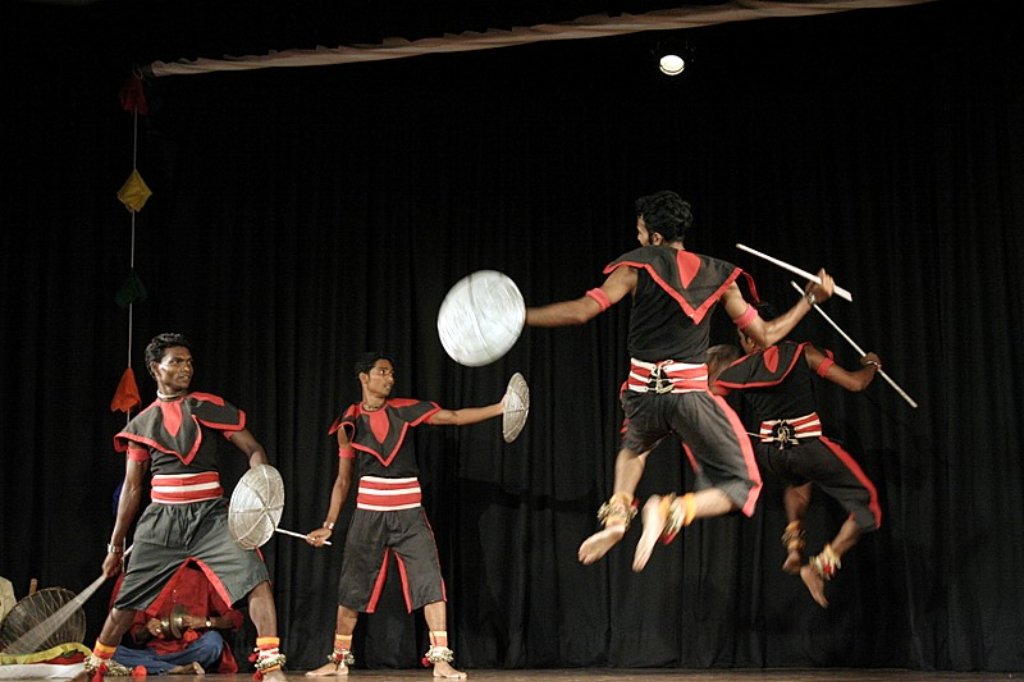
- Cane shield (dhal) & stick — once swords and shields
- Performers
- Traditionally men; modern presentations include women
What Is Dhali Dance?
Dhali dance is a heroic martial folk dance of the Bengal region, performed by troupes of dancers who stage the skills and spirit of the province’s old fighting men.
The name says exactly what the dance is. Dhali comes from dhal, the Bengali word for shield — so Dhali is, quite literally, the dance of the shieldmen. Cultural bodies such as the Eastern Zonal Cultural Centre (EZCC) describe it as the shield dance: the war dance of the Dhali, or shieldman, troupes that once served in the armies of Bengal’s rulers.
What sets Dhali apart from most folk dance is its character. The spectacular movements are formal and controlled — closer to athletic exercises than to lyrical dance — and the performance draws its beauty from intricate manoeuvres and ordered formations rather than from song. Being a war dance, it is traditionally performed without singing: the energy comes from the dancers’ vigour, the rhythm of the drill and the clash of the mock weapons.
Centuries after the soldiers it honours, Dhali survives as a living tradition in rural Bengal, performed at weddings, festivals and cultural programmes — and today it is also presented on stage by folk troupes at events across India.
Sources: Eastern Zonal Cultural Centre, Govt. of India; Bangiya Sahitya Parishad cultural notes (bbswb.net).
Dhali Dance History and Origins
Dhali’s story begins not on a stage but in the cantonments of sixteenth- and seventeenth-century Bengal.
Cultural archives trace the dance to the Dhalis — the shieldmen — who served in the armies of the renowned potentates Pratapaditya and Sitaram of the Jessore district, who flourished in the 16th and 17th centuries. Pratapaditya of Jessore (in undivided Bengal, a region that now lies in Bangladesh) is remembered as one of the region’s most powerful kings, and it was during his reign that the dance form is believed to have originated and flowered.
The most vivid account of its origin comes from the Eastern Zonal Cultural Centre: after winning a battle, the fatigued and exhausted soldiers danced with their swords and shields in the cantonment, working off the tension of war and inspiring themselves for the next campaign. Those victory celebrations of shield-carrying soldiers gradually settled into a formal repertoire — the Dhali dance we recognise today.
The dance never lost its connection to its soldiers’ descendants. Historical accounts record that the descendants of these soldiers, from both Hindu and Muslim families, continued to perform Dhali at weddings and other village festivals. That shared heritage is part of what makes the form culturally significant: it is a Bengali tradition carried by communities of different faiths alike.
Sources: EZCC (Govt. of India); Bangiya Sahitya Parishad cultural notes (bbswb.net).
Dhali Martial Dance: Traditional Characteristics
Every element of a traditional Dhali performance points back to its military roots:
A group war dance
Dhali is performed by groups of dancers, never as a solo item — a direct echo of the shieldman troupes that once drilled and fought together.
Mock combat
Performances stage the clash of battle: dancers face off with shields and sticks, rehearsing attack, defence and advance in stylised sequences.
Athletic, formal movement
The EZCC describes the movements as formal and “more in the nature of athletic exercises” — vigour, control and stamina over ornament.
Ordered formations
Its aesthetic value lies in intricate manoeuvres and disciplined, ordered formations — the geometry of a military drill turned into dance.
No songs
Being a war dance, traditional Dhali is performed without songs — rhythm and impact carry the performance instead.
Spectacular evolutions
Cultural archives note the form is “marked by great vigour and rhythmic quality”, with spectacular evolutions that make it a striking stage act.
Dhali belongs to a small family of heroic dance traditions of eastern India — alongside the Raibenshe war dance of rural Bengal and the masked martial Chhau of Purulia — each preserving, in its own way, the memory of the region’s martial past. You can read how they differ on our pages for Purulia Chhau and Kathi, the stick dance of Bengal.
Dhali Dance with Shield and Sword: Props & Costume
The shield is the heart of the dance — and its props tell the story of how the form has changed.
In its earliest form, Dhali was danced with the real weapons of the soldier: the sword and the shield. Cultural records note that over the generations the actual shields and swords were replaced by small cane shields and light cane sticks — light enough to whirl through fast, spectacular evolutions, and safe enough for village celebrations. On modern stages, troupes may further use decorative replicas, with the look of the warrior and none of the risk.
The traditional Dhali costume is built for fast, physical movement rather than display:
- Dhoti or fitted trousers — secure lower wear that will not restrict kicks, lunges or crouches.
- Bare torso or a light vest — keeping the dancer cool and unencumbered through vigorous exertion.
- A head cloth tied firmly — the practical headgear of a fighter, holding steady through the drill.
- The cane shield and stick — carried in both hands, they are both the dance’s instruments and its identity.
Because the form is martial, nothing in the costume is loose or dangling: every item is tied close to the body, exactly as a shieldman would have dressed for battle drill. When you book a Dhali dance performance for an event, confirm the prop and costume details with the troupe in advance — presentations are often adapted to suit stage safety and house rules.
Dhali Dance Movements and Performance Style
A Dhali performance is less like a dance recital and more like a beautifully rehearsed battle drill.
Performances typically stage mock combat between two groups of dancers, each armed with a cane shield and stick. Advancing, retreating, guarding and striking in turn, the two sides build the rhythm of a battle — every clash answered by a counter-move, every sequence resolved in favour of discipline and grace.
Around that central combat, the dance is built on evolutions — the wheeling, ordered movements of a trained troop. Dancers change formation, wheel in circles, advance in lines and hold postures of challenge and defiance. The EZCC notes that it is “a dance of high aesthetic value by virtue of its intricate manoeuvres and ordered formations”: the spectacle lies in how precisely a group of dancers can move as one body.
The physical demands are real. The form is marked by great vigour — jumps, charges, crouches and whirls delivered with full energy — balanced by the rhythmic quality that keeps a dozen dancers moving to a single beat. It is this combination of power and precision that makes a traditional Dhali dance performance such a memorable centrepiece at cultural events.
Cultural Significance of Dhali Dance
Dhali dance is one of the clearest living reminders that the Bengalis, as cultural historians of the region record, were once renowned for their military prowess. Where most folk dances grow from farming seasons, devotion or social satire, Dhali grew from the training grounds and victory celebrations of real soldiers — and it still carries that spirit of valour, discipline and honour.
Its significance runs deeper than spectacle:
- A shared heritage. The dance has been carried through generations by descendants of the old shieldmen from both Hindu and Muslim families — a tradition that belongs to Bengali communities together, not to one faith alone.
- A living link to history. Every performance re-enacts the world of Bengal’s sixteenth- and seventeenth-century armies, keeping the memory of figures like Pratapaditya of Jessore alive in popular culture.
- An evolving tradition. Over the years the form has been modified and extended to women dancers as well, so the tradition continues to grow rather than fade.
- A mark of celebration. From weddings to village festivals, inviting the Dhalis to perform has long been a way for communities to mark joyous occasions with vigour and pride.
In the wider map of India’s folk arts, Dhali stands with the other heroic dances of the east — the state’s own cultural centre lists it among the well-known folk dances of Bengal, alongside names like Chhau, Gambhira and Baul.
Traditional Dhali Dance Performance Today
The old battlefield context is gone, but the dance has not stood still. Dhali is still performed in the districts of Bengal at weddings, village festivals and community celebrations, just as the descendants of the shieldmen have done for generations. At the same time, the form has travelled to new stages: folk festivals, school and college cultural programmes, heritage celebrations and televised presentations of Bengal’s folk arts now regularly feature Dhali troupes.
Modern presentation has brought practical changes. Swords have long given way to cane sticks and shields; choreography is often tightened to suit stage timings; and troupes may combine the drill sequences with brief spoken introductions that explain the dance’s history to audiences meeting it for the first time. What has not changed is the essence: vigour, rhythm, formation and the proud memory of the shieldmen.
Book Dhali Dance Performers for Your Event
We arrange authentic Dhali dance troupes for weddings, festivals, institutions and corporate events across India. Share a few details and we will confirm availability, troupe size and a quotation for your date.
Tell us about your event
- Event date and backup date, if any
- City and venue — indoor stage or open ground
- Audience size and type (guests, students, employees)
- Performance duration you have in mind
- Preferred number of dancers, if known
- Theme, language of anchoring, or special requests
What we confirm for you
- Troupe availability for your date and city
- Troupe size, props and traditional costumes
- Travel and stay arrangements for outstation events
- Sound, music and stage requirements
- Safe stage adaptations of the traditional props
- A clear, written quotation before you commit
Events That Suit a Dhali Dance Troupe
The dance’s energy and striking visual character make it a strong choice wherever a stage needs a memorable opening or a headline act.
Weddings & Sangeet
A high-voltage folk opening that sets the bar for the whole celebration — spectacular with drums and lights.
Cultural Festivals
A heroic war dance is a natural centrepiece for state, district and folk-arts festivals showcasing Bengal’s heritage.
Schools & Colleges
Annual days, heritage weeks and youth festivals — students love the drama, and the dance teaches real history.
Corporate Events
Theme evenings and team celebrations that want authentic regional culture instead of the usual playlist.
Durga Puja & Community Celebrations
Puja pandals, club programmes and community gatherings across Bengal and beyond.
Government & Institutional Programmes
Republic Day tables, official receptions and cultural showcases that call for recognised traditional forms.
Frequently Asked Questions about Dhali Dance
What is Dhali dance?
Dhali dance is a heroic martial (war) folk dance of Bengal, performed by groups of dancers. Its name comes from the word dhal, meaning shield — it is essentially the dance of the shieldmen. The movements are formal and athletic rather than lyrical, built on intricate manoeuvres, ordered formations and mock combat.
Where is Dhali dance associated with?
Dhali dance is associated with the Bengal region — it originated and flowered during the reign of Raja Pratapaditya of Jessore (in undivided Bengal, now in Bangladesh) and is today counted among the well-known folk dances of West Bengal.
What is the history of Dhali dance?
Cultural archives trace Dhali to the shieldmen (Dhalis) who served in the armies of Bengal’s potentates Pratapaditya and Sitaram of the Jessore district, who flourished in the 16th and 17th centuries. According to the Eastern Zonal Cultural Centre, after winning a battle the exhausted soldiers danced with swords and shields in the cantonment to inspire themselves for the next war. Descendants of these soldiers — both Hindu and Muslim — later performed the dance at weddings and village festivals.
Why is Dhali called a martial or war dance?
Dhali began as the war dance of shieldman troupes in the armies of old Bengal. Performances evoke valour and prowess through mock combat, energetic evolutions and disciplined formations, and are closer to athletic exercises than lyrical dance. Being a war dance, it is traditionally performed without songs.
What props and costume are used in Dhali dance today?
Historically the dance used real swords and shields. Today performers carry small cane shields (dhal) and light cane sticks that stand in for swords. The typical costume is a dhoti or fitted trousers with a vest or bare torso and a firmly tied head cloth. Stage performances for events may use safe replicas of the weapons.
Can I book a Dhali dance troupe for my event?
Yes. Artist Management Companies arranges authentic Dhali dance performances for weddings, cultural festivals, school and college functions, corporate events and community celebrations across India. Call +91-9355056666, message us on WhatsApp, or send your event details through our contact page to request a quotation.
What information should I share when enquiring about a Dhali dance performance?
Share your event date, city and venue, whether the programme is indoors or outdoors, the audience size, performance duration you need, your preferred number of dancers, and any theme or technical requirements. We confirm artist availability, troupe size, props and costumes, travel arrangements and sound or stage needs before quoting.
Explore More Folk Dances of Bengal
Dhali is one thread in Bengal’s rich folk tradition. These related forms each have their own dedicated page:
Looking beyond Bengal? Explore our folk dance troupes across India.
Plan a Dhali Dance Performance
Tell us your event date, city and audience — we will get back with troupe availability, prop and costume details, and a clear quotation. No obligation, no hidden charges.