Jhuma Folk Dance Troupe - Rajasthan Folk Dance
Jhuma Folk Dance is a lively and expressive traditional dance form that reflects the everyday emotions, hopes, and celebrations of rural communities in eastern and central India. Deeply rooted in the cultural life of tribal and agrarian societies, Jhuma is more than a performance—it is a joyful social activity that brings people together through rhythm and movement.
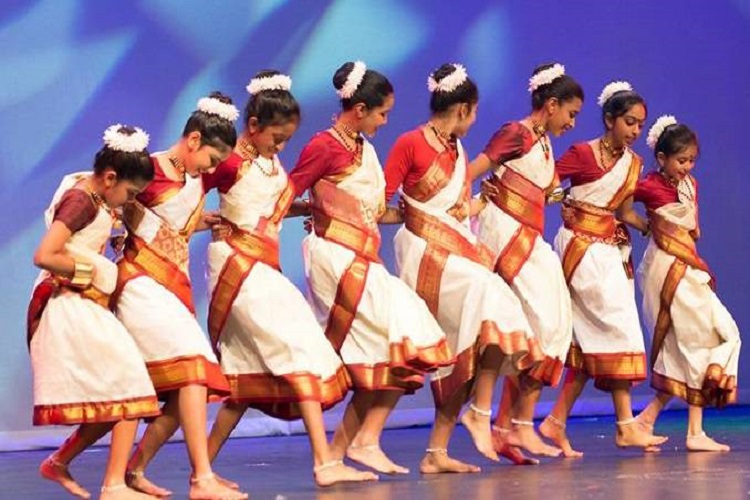
The dance is usually performed in groups, with men and women dancing side by side in coordinated steps. Dancers often form circular or semi-circular patterns, symbolizing unity and harmony within the community. The movements are simple yet energetic, marked by gentle footwork, swaying bodies, and expressive hand gestures that flow naturally with the music. Jhuma is commonly performed during festivals, seasonal gatherings, weddings, and post-harvest celebrations, making it closely linked to the agricultural cycle and community life.
Traditional musical instruments play a vital role in Jhuma Folk Dance. The beats of drums, along with the sounds of folk instruments and rhythmic clapping, create an infectious tempo that encourages participation from both performers and spectators. Folk songs sung during the dance often describe nature, love, daily labor, and social values, preserving oral traditions passed down through generations.
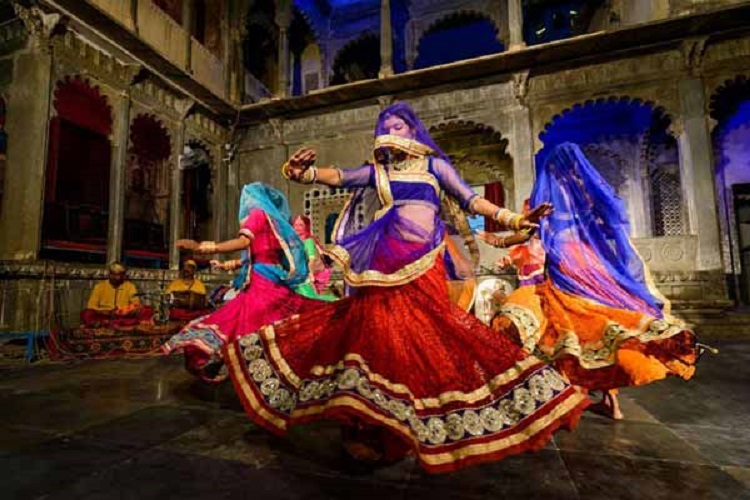
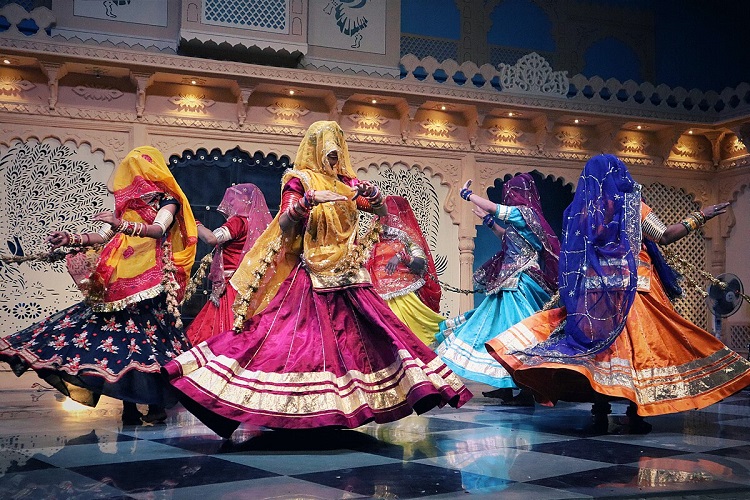
Costumes worn during Jhuma performances are colorful and region-specific. Women typically wear bright sarees or traditional skirts adorned with jewelry, while men dress in simple ethnic attire that allows free movement. These visual elements enhance the festive atmosphere of the dance.
In today’s changing cultural landscape, Jhuma Folk Dance remains a powerful symbol of cultural identity. It continues to connect younger generations with their roots, keeping alive the spirit, simplicity, and collective joy of folk traditions.
Photo & Video Gallery
Frequently Asked Questions
What types of Rajasthan folk dance performances do you offer?
We offer authentic Rajasthan folk dance performances including Ghumar, Chakri, Ganagor, Jhulan Leela, Jhuma and 3 more. Our repertoire covers traditional, classical, and contemporary adaptations of Rajasthan's rich cultural heritage.
How much advance notice do you need for booking Rajasthan folk dancers?
We recommend booking Rajasthan folk dancers at least 2-3 weeks in advance for local events and 4-6 weeks for outstation performances. However, we can accommodate last-minute bookings subject to artist availability.
Do you provide costumes and musical instruments for Rajasthan folk dance performances?
Yes, we provide authentic traditional costumes, musical instruments, and sound equipment for all Rajasthan folk dance performances. Our costumes are specially designed to reflect the regional authenticity of Rajasthan's cultural traditions.
Can you customize Rajasthan folk dance performances for specific themes or occasions?
Absolutely! We can customize Rajasthan folk dance performances to match your event theme, duration, and audience preferences. Our choreographers can adapt traditional dances while maintaining cultural authenticity.
What is included in the Rajasthan folk dance performance package?
Our Rajasthan folk dance package includes professional dancers, traditional costumes, musical instruments, sound system, cultural commentary, and coordination. We also provide cultural context and educational elements if requested.
Do your Rajasthan folk dancers perform at destination weddings and outdoor venues?
Yes, our Rajasthan folk dancers are experienced in performing at various venues including destination weddings, outdoor locations, hotels, and community centers. We adapt our performances to suit different venue requirements.
Are your Rajasthan folk dance performances suitable for international audiences?
Our Rajasthan folk dance performances are specially crafted for diverse audiences, including international viewers. We provide cultural commentary and context to help audiences appreciate the significance of Rajasthan's traditional arts.
How do you ensure authenticity in Rajasthan folk dance performances?
Our Rajasthan folk dancers are trained by master artists from the region and have extensive knowledge of traditional techniques, costumes, and music. We maintain authenticity while making performances engaging for modern audiences.
What are the space and technical requirements for Rajasthan folk dance performances?
For Rajasthan folk dance performances, we typically need a minimum 15x15 feet performance area, basic lighting, and power supply for sound equipment. We can adapt to smaller spaces with advance notice.
Do you offer workshops and training sessions for Rajasthan folk dances?
Yes, we conduct workshops and training sessions for Rajasthan folk dances at schools, colleges, corporate offices, and cultural centers. Our master trainers provide hands-on experience in traditional dance forms and cultural education.
Related States & Popular Folk Styles
Explore folk dance traditions from other regions of India:
Popular Folk Styles Across India
India's diverse cultural landscape offers a rich tapestry of folk dance traditions. From the energetic Bhangra of Punjab to the graceful Bharatanatyam influences in Tamil folk dances, each region contributes unique elements to India's cultural heritage. Our network of professional artists can perform authentic folk dances from multiple states, making us your one-stop solution for cultural entertainment.
Contact & Quick Quote
Ready to book authentic Rajasthan folk dancers for your event? Contact us today for a personalized quote and event planning consultation.
Delhi Office
Address: Plot No.2, 1st Floor, Street No.7, A Block, West Sant Nagar, Burari, Landmark – Rani Public School, Delhi – 110084
Phone: +91-9355056666
Bangalore Office
Address: 102/7, Silver County Rd, Kudlu, Bengaluru, Karnataka 560068
Phone: +91-9611904473
Patna Office
Address: Flat No. 1, 2nd Floor, Patna
Email: info@anantagroup.com