Dangi Dance of Himachal Pradesh
Dangi is a folk dance of the Himachali hills performed mainly by women, who link hands in a long semicircle and carry old mountain tales through song. Here you can read what is genuinely known about its themes, style and occasions — and, if you are planning an event, how to enquire about booking a Dangi performance.
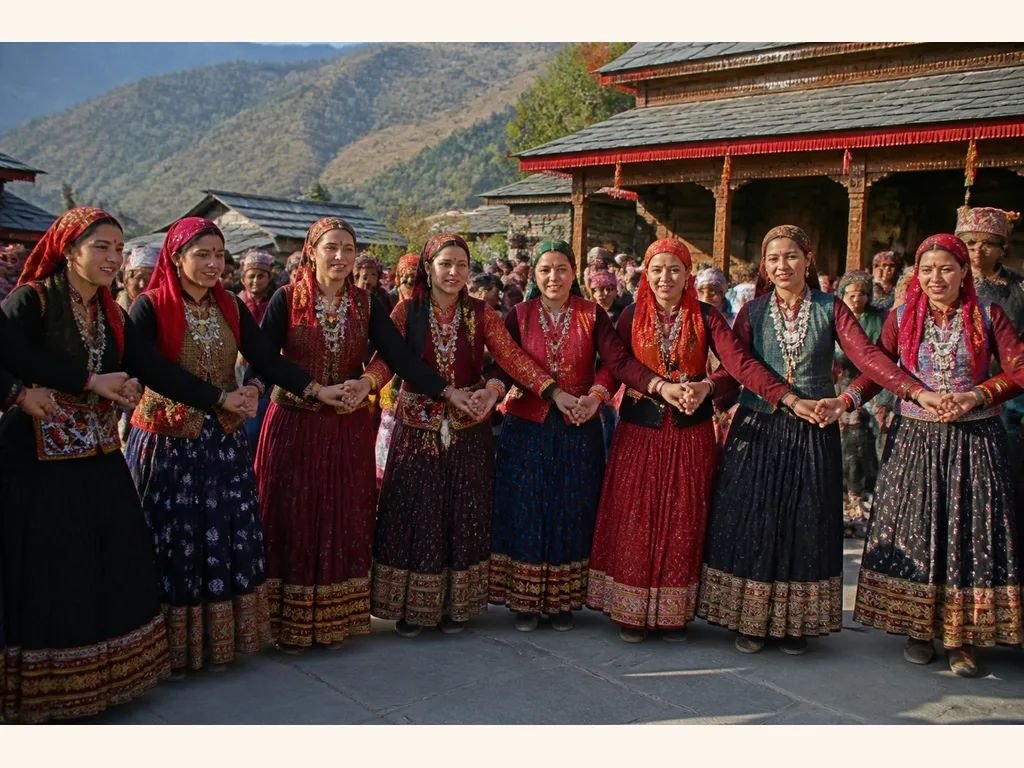
- State
- Himachal Pradesh, India
- Dancers
- Predominantly women and girls
- Formation
- Hands linked in a semicircle
- Themes
- Folk tales of love and everyday trade
- Occasions
- Temple fairs, harvest season, weddings
What Is Dangi Dance?
Dangi is one of the recognised folk dances of Himachal Pradesh — a state where almost every valley keeps its own dance tradition, from the long-line group dances of Kullu to the masked monastic dances of Lahaul and Spiti. Dangi stands apart in two ways. First, it is performed predominantly by women, who wear traditional Himachali dress and hold hands in a semicircular chain. Second, it is a storytelling dance: what the audience follows is not a display of steps but the tale carried in the dancers' songs.
Published accounts of the dance describe two classic themes. The first is a love story — a king who falls in love with a village girl he was not expected to marry, and the couple's struggle against social disapproval. The second is everyday economic life: buying, selling and exchange, the "business" through which mountain households survived. Together they give Dangi a character that is part celebration and part social memory.
Dangi Dance History and Origin
No dated, documented origin for Dangi has been published, and we will not invent one. What published accounts do agree on is that the dance is rooted in the oral folklore of Himachal Pradesh, that its stories are far older than its modern stage versions, and that it has been performed for generations at fairs and festivals across the hill districts.
Regional memory differs on where the tradition sits. Several accounts connect Dangi with the Gaddi community of the Chamba region, whose women are described as its traditional performers; one regional publication even calls it among the oldest dances of the state, though that claim cannot be independently verified. Others place the dance at the Naina Devi shrine in Bilaspur district, offered as a devotional performance during the annual fair and the harvest season. A few writers also associate it with the Minjar fair of Chamba. Rather than pick one story, we present them as they stand: the honest position is that Dangi's precise place of origin is not documented in the sources available today.
About the information on this page
The cultural details above are compiled from published descriptions of Himachal Pradesh's folk traditions, including regional cultural publications and independent articles on the state's dances. We searched for official government documentation of the dance specifically; none is readily available online, and no academic study of Dangi could be located.
Where accounts disagree — as on the dance's regional origin — we say so plainly instead of presenting one version as fact.
Traditional Style and Performance of Dangi Dance
Descriptions of Dangi's performance style are consistent on the essentials:
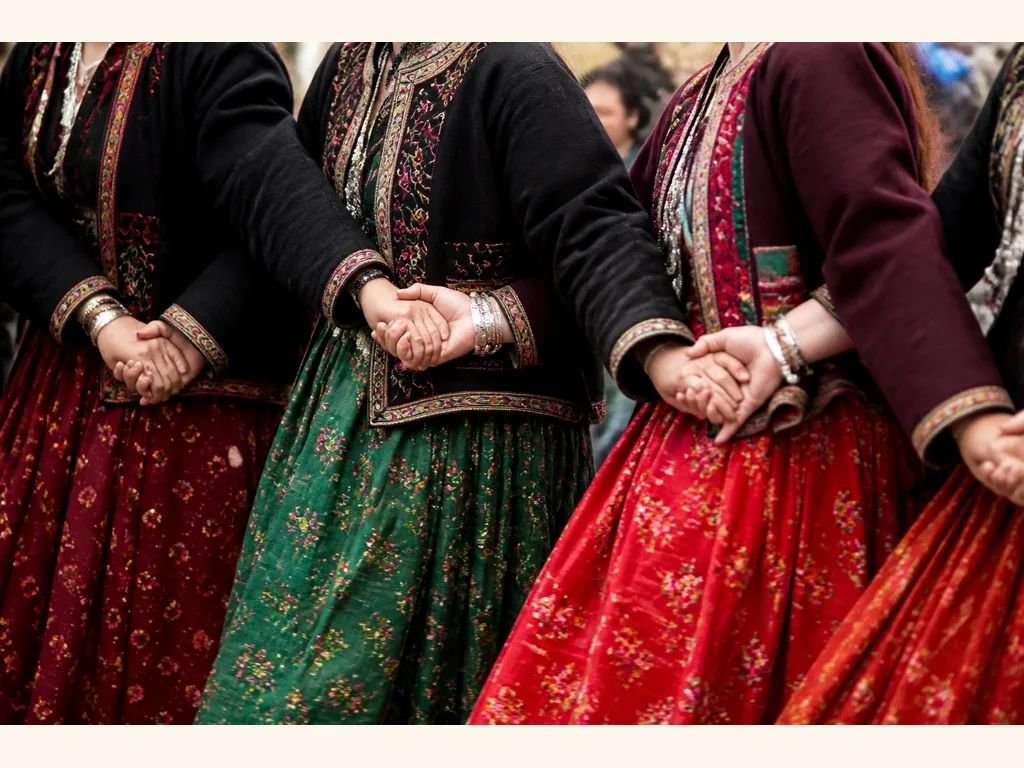
- Formation. Dancers — usually women and girls — stand in a semicircle or a long chain, holding hands.
- Movement. The emphasis falls on coordinated swaying of the body — waist, hips and shoulders — rather than on fast, intricate footwork. The line moves gently as one, often turning within the curve of the circle.
- Songs. The dancers sing as they move. The words carry the story — the king and the village girl, the marketplace, the turning of the seasons — so the audience follows the tale through the singing.
- Community setting. The dance is described as a group tradition of the hills, performed by and for the local community rather than by a professional troupe alone.
Traditional Dangi Dance Costume and Music
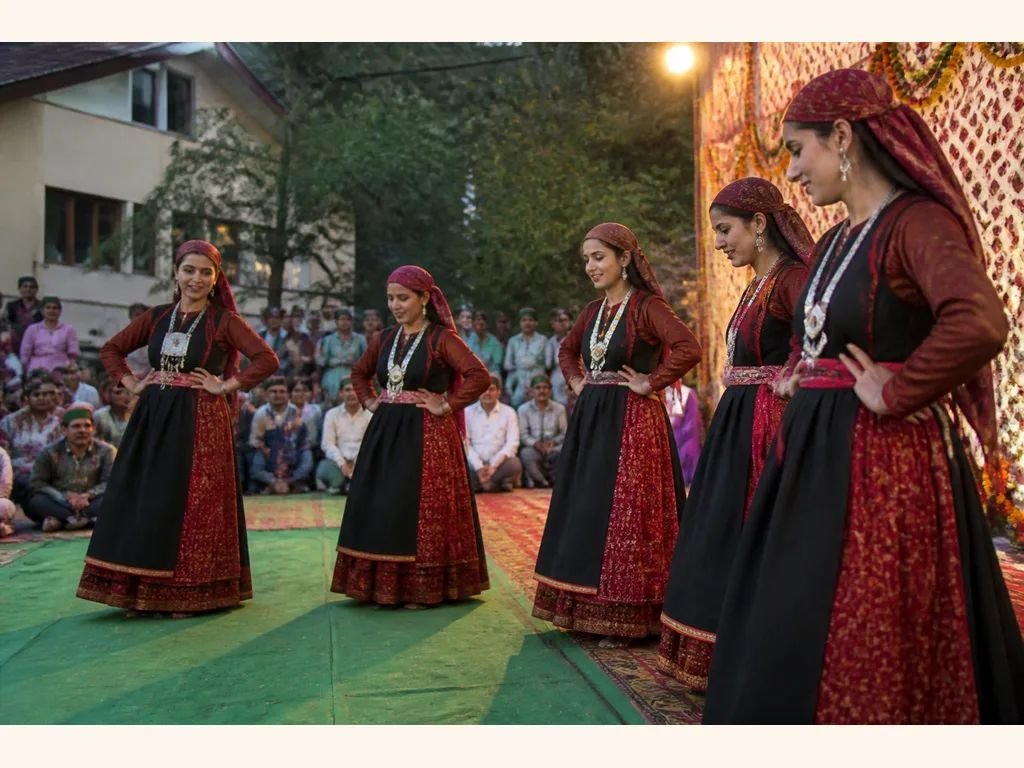
Accounts of the dance record that Dangi performers wear traditional Himachali dress — the festival clothing of the hills — often with local ornaments. The accessible sources do not describe the costume in close detail, so we will not guess at headwear, drapes or jewellery specific to Dangi.
The same honesty applies to the music. No instrument list specific to Dangi appears in the published literature, which suggests that performances are carried principally by the dancers' own singing. Troupes that present Dangi on stage today arrange their own accompaniment — one more practical point we confirm directly with the artists when you enquire about a booking.
Cultural Significance of Dangi Folk Dance
Three things give Dangi its cultural weight in Himachal Pradesh. It is devotional: at the Naina Devi shrine it is described as an offering, performed as an act of faith rather than a show. It is a women's tradition: at a time when public performance spaces were few, it gave the hills' women a form of public artistic expression of their own. And it is a memory-keeper: its songs carry the folklore of the region — its romances, its markets, its seasons — from one generation to the next.
Where and on Which Occasions Is Dangi Dance Performed?
- The Naina Devi fair and the harvest season — the setting most accounts describe.
- Jataras and village festivals — local fairs across the region, where women's group dances are customary.
- Weddings and family celebrations in the traditional setting.
- Modern stages — state cultural programmes, school and college festivals, and corporate or destination events, where troupes present adapted performances.
Because the dance is regionally rooted, genuine Dangi troupes are fewer in number than performers of the state's better-known group dances. For festival-season dates, enquire early.
Dangi Folk Dance in Pictures
Book Dangi Dance Performers for Your Event
Artist Management Companies arranges folk dance performances across India, including Dangi dance troupes for cultural programmes. The service works the same way as our Himachal Pradesh folk dance bookings: tell us about your event, and we confirm the availability of suitable artistes, the troupe size, the performance duration and a quote — before you commit to anything.
We regularly provide folk performances for weddings and sangeet evenings, college festivals, corporate events, government and community cultural programmes, and tourism promotions.
To enquire, call or WhatsApp +91-9355056666, or use the enquiry form on our contact page. You will get a faster, more accurate quote if you share:
- The event date and the city.
- The venue — indoor stage or open ground.
- The occasion — wedding, college fest, corporate day, community fair.
- The approximate number of guests.
- How long you want the performance to run.
- Any preference on troupe size or live music.
Pricing depends on troupe size, duration and travel, so we quote for your specific event rather than publishing standard rates. Sharing these details helps us check artist availability and reply with realistic options for your date — it does not confirm a booking by itself.
Frequently Asked Questions About Dangi Dance
What is Dangi Dance of Himachal Pradesh?
Dangi is a folk dance of Himachal Pradesh performed mainly by women, who link hands in a semicircle and move together to traditional songs. It is a storytelling dance built on local folklore — the best-known themes are the love story of a king and a village girl, and scenes of trade from everyday mountain life. The dance is closely associated with the Naina Devi shrine fair and with harvest celebrations.
Where did Dangi Dance originate?
No dated origin for the dance has been documented. Regional accounts differ: several connect Dangi with Gaddi women of the Chamba region, while others place it at the Naina Devi shrine in Bilaspur district, where it is performed during the annual fair and the harvest season. What is agreed is that it belongs to the oral folk tradition of Himachal Pradesh.
What are the main themes of Dangi dance?
Published descriptions mention two classic themes. The first is a royal love story — a king who loves a village girl against social expectation. The second is business — the buying, selling and exchange of everyday hill life. The themes are carried through the dancers' songs rather than spoken narration.
Is Dangi dance the same as Nati?
No. Nati is Himachal Pradesh's best-known group dance, usually performed in long lines by men and women together, with many regional varieties. Dangi is a separate tradition — a women-led dance in linked semicircle formation, with its own songs and folklore themes.
How can I enquire about a Dangi dance performance for an event?
Call or WhatsApp +91-9355056666, or send the enquiry form on our contact page. Share your event date, city and venue, the occasion, expected guest count and preferred performance duration. We confirm the availability of a suitable Dangi troupe, the troupe size and performance length, and then share a quote for your specific event.
Continue Exploring
Planning a Cultural Programme?
Tell us the date, city and occasion, and we will check the availability of a Dangi dance troupe for your event — with a clear quote before you commit.
Discuss Your Event RequirementsOr call +91-9355056666